
The incumbents Bharti Airtel and Vodafone Idea recorded adjusted gross revenue of Rs 10,701.5 crore and Rs 9,808.92 crore, respectively, during the quarter.

Spiralling prices pinched the pocket of consumer as edible oil, fuel and many other commodities turned dearer this year amid pandemic-induced disruptions but the inflationary pressure is anticipated to ease, though marginally, in the coming months. As consumers, at retail as well as wholesale levels, are willy-nilly learning to live with the new normal of curbs to contain the spread of coronavirus infections, experts are of the view that elevated inflation is likely to stay longer. After dealing with the devastating blows from the second COVID wave, especially during the April-June period, the economy is well on the revival path but the emergence of Omicron might unsettle the recovery trajectory in the short term.

The rupee has depreciated 2.35 per cent in the past three months and one per cent in the past month, despite strong capital flows and falling oil prices.

Container Corporation of India (Concor) has been the worst performer among major logistics & port stocks registering returns of about 4 per cent over the past three months as compared to 10-12 per cent for peers Gateway Distriparks and Adani Ports and SEZ. Uncertain outlook on the export-import (EXIM) trade front, market share loss, lack of progress on divestment, and weak June quarter results weighed on the stock. Volume and margin movement will be key triggers for the stock going ahead. As was the case in the previous quarter, margin performance was muted even in the June quarter. Operating profit in the quarter was down 17 per cent at Rs 391 crore missing estimates by over 15 per cent. Operating profit margins at 20.4 per cent, too, were down sharply by 350 basis points over the year-ago quarter.

This measure will ensure that the price of a scrip cannot move upward or downward beyond a limit set for the day.

'The years after the financial crisis of 2008 were tough for brokers as volumes dwindled and retail investors stayed away.'

Among other segments, home broadband subscriptions have picked up and the virtual private network service, too, increased by around 15 per cent.

'Quality of management, corporate governance, allocation of capital, full disclosures should form the basis to decide investing in a particular stock.'

Total income of Wipro was almost flat at Rs 15,571.4 crore at the end of the first quarter of 2020-21 compared to Rs 15,566.6 crore in the corresponding quarter of the fiscal year 2019-20.

Despite the onset of wedding season, the situation in apparel retail market remained unchanged and saw sharp decline in sales

Shares of Motilal Oswal Financial Services, Edelweiss Financial Services and IIFL Holdings have all doubled in the past one year against the Sensex's 23 per cent gain.
Inflation in food articles, fuel and power contracted in July.

Analysts believe total cost of production at Rs 1,000/tonne reasonable for power firms.

Strong macroeconomic headwinds causing turbulence in the $245-billion Indian IT industry are yet to calm down. Top Indian IT services companies are likely to post a decline or just marginal growth in sequential revenue in Q1FY24 because of a soft discretionary spending environment. Though the first quarter is seasonally strong for IT firms, "June 2023 will be an exception", according to analysts at Kotak Institutional Equities.

Monsoons have had limited effect on market returns for a given year, report Sachin Mampatta and Sundar Sethuraman.

There was broad-based rally with participation across sectors creating enormous wealth for investors but starting 2018, the rally got concentrated into select large-cap companies with under performance in broader markets.

Investors are anxious over the US-China trade tension, a sharp devaluation in yuan and uncertainty over Kashmir issue.

Inflows from Europe, falling crude oil to come to the rescue if rupee cracks against the dollar.
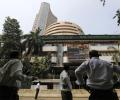
The Nifty PSU Bank pared losses to end flat after falling as much as 1.05%

Its production declined for the third consecutive year in financial year 2020-21 (FY21) to an 11-year low, while sales volume contracted for the second year to the lowest since FY15. The company manufactured around 1.08 million vehicles last fiscal, a decline from 1.17 million the previous year, and a steeper fall from its all-time high tally of 1.62 million reported in FY18.

Worries remain on earnings-valuations mismatch, global issues; resolution of the MAT row could be biggest positive trigger

New series points to a sharp recovery since FY14.

The EV industry is at an inflection point and batteries will play a critical role ahead -- batteries and related components typically constitute 35-45 per cent of an EV's costs.

The operating environment is unpredictable, but if the bank can't give a clear picture of what's in store, calling the bottoming out of its asset quality stress is nearly impossible.

Technically, the Indian economy is on road to recovery.

The buyback price is at around 28 per cent premium to the current market price of Rs 67 on the Bombay Stock Exchange

Corporate revenues will decline for a third consecutive quarter in March on a YoY basis - one of the worst shows by these companies in many years.

Inflation trajectory does not match the slump in demand, prolonged pause on rates likely.

For top IT services firms, revenue growth in FY15 was the slowest since the Lehman crisis

IT sector's trading multiples hit post-Lehman lows, providing good entry points.

About 55 per cent of the public offers that hit the market since 2008 are still trading below their issue price.

The turmoil on the Street and a continued fall of the rupee may affect growth stocks, pushing equity investors back to the relative safety of defensive counters, or forcing them to flee markets, or both.
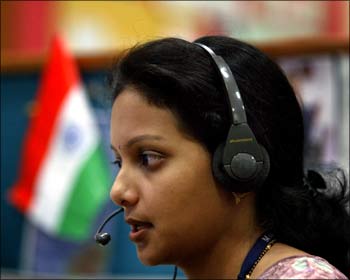
Analysts factor in 200-300-bps impact on sales in FY16
So far, India has attracted over $20 billion in the debt segment, thanks to the rate differential.

Asset quality stress has ballooned recently, as growth slowed and interest rates continued to rise.

Declining vegetable prices brought down the retail inflation to a 15-month low of 4.59 per cent in December and within the comfort zone of the Reserve Bank, government data showed on Tuesday. It is for the first time during the current fiscal that the Consumer Price Index (CPI) based inflation print is below 6 per cent or in the RBI's target range of 2 to 6 per cent. The central bank factors in the CPI-based inflation while arriving at its monetary policy. The inflation in December 2020 came down from 6.93 per cent in November, mainly on account of 10.41 per cent decline in vegetable prices over the year-ago period.

An analysis of year-wise movements of average global crude oil prices versus India's GDP reveals no inverse correlation, contrary to wide belief.

The fall came on the back of a massive selloff in NBFCs, led by DHFL which skidded over 50 per cent on fears of a liquidity crisis.

A weaker rupee could aid corporate earnings through its positive impact on export intensive sectors such as information technology services, pharmaceuticals and commodity producers such as metal and mining, and oil and gas companies.

Besides foreign flows, corporate earnings and US Federal Reserve chief Janet Yellen's testimony to the nation's legislature are also likely to impact investor sentiment.
